Non-standard anti-capitalist philosophy publication.
-
Every generation has found in itself the anarchist ideals of epoch and cause appropriate flavours. The Ukrainian anarchism of the early 20th century had its groundings in the hopes and potential of the peasantry for revolution and collective self organisation, sexual anarchism of the 60s with its individualist fervour and the promise of the internet…
-
In one of the chapters of his book Against Progress (2025), Slavoj Žižek offers an interesting concept of Accelerationism: “Accelerationism, a recent form of historic determinism, is a notion whose basic core should not be confused with its different versions and aspects (neofeudalism against egalitarian democracy, abundancy communism, and so on). However, I believe that…

-
When we attempt to derive a political understanding from Quentin Meillassoux’s philosophical project, we encounter a pretty obvious problem. As the philosopher stated rather bluntly in his interview with Ravini, when asked what the future promises politically, he replies: “The existing is contingency, and philosophy is unable to speak of contingent things.” Although Meillassoux does…

-
The School of Materialist Research is pleased to announce the call for the Integrated Credit Program, Fall Semester 2026. Full information about the program — including the complete course descriptions and the biography of each instructor — can be found at the following link: https://schoolofmaterialistresearch.org/Integrated-Credit-Program-Fall-Semester-2026.

-
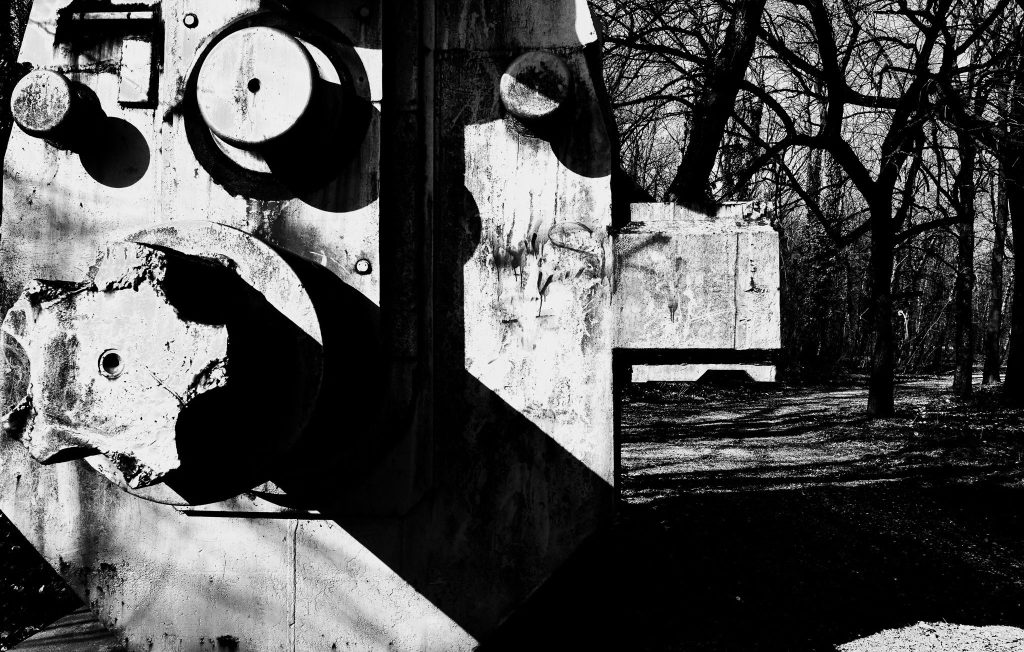
Monochromatic Intensities is an ongoing photographic and textual exploration of post-socialist Hungary, examining how the material textures of everyday life—its infrastructures, monuments, industrial remnants and overlooked spaces—continue to shape perception, memory and political imagination. Developed through repeated visits to the same locations over changing seasons, the project approaches photography not as a means of documenting…
-
It is difficult to conceive of a mass movement that could genuinely resist the current order of the world. Not because we lack the will to make something different. There are millions of people who want nothing more than to settle into safe, prosperous, and happy lives that are not constantly disturbed by the violence…
-
Gilles Deleuze claimed that paintings, or art in general, can be viewed not as a manifestation of a philosophy, a meaning, a way per se, for one can see instead the capability of philosophy in its extraction of ideas from art.[1] What can cybersigilism and eurotrash give us? What does it tell about the subject…

-
Does domination have its roots in theology? Or should we, as good materialists, assume that worldly inequality (economic or political) merely mirrors itself in theological conceptions, thus finding ideological justification? Be that as it may, the knot that unites politics and theology should be examined. Perhaps the purpose of political theology is only to ground…

-
How is the subject situated in the world? This issue has been contended throughout history. For the Neoplatonists, no such issue existed. The subject was only the outward presentation of a deeper noncorrelate point of reference. The One, being the nucleus toward which every thing contracts, preserving its circumscription against the aggregate of being itself,…

-
Nolan’s The Odyssey (2026) is something new. A determined, coherent attempt to take what functions for our culture as a sacred object, a text that demands reverence in virtue of its sheer authority, and to treat it instead as material, as occasion, the way a text becomes someone’s text, someone’s expression in the form of…


